We believe children should develop global competence while remaining confident in Thai society and deeply connected to their roots.
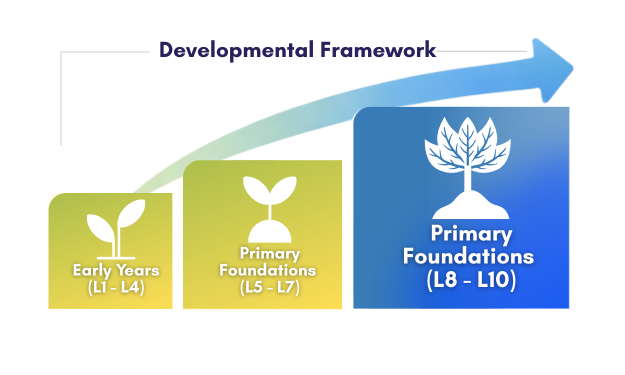
All curriculum expectations are mapped into our Carroll Level Framework (L1–L10). Levels are developmental — not age-based.
Children of the same age may be at different levels across subjects.
What matters most is consistent, meaningful growth. Levels reflect increasing understanding, independence, analytical depth, and confidence over time.
Thai language learning in the early years focuses on confidence, communication, and foundational literacy.
Children grow from listening and imitating to expressing themselves clearly in short sentences and simple stories.
Below is how development typically progresses from K0 to K3.
L1 (Foundation)
At this stage, children explore Thai through songs, routines, and daily interactions.
You might see children
L2 (Emerging Expression)
Children begin naming and recognizing the world around them.
You might see children:
L3 (Building Literacy)
Children connect sounds, words, and meaning more independently.
You might see children:
Reading and writing begin to carry meaning.
L4 (Growing Confidence)
Children develop clearer expression and early sentence-level literacy.
You might see children:
At this stage, children begin to communicate ideas more independently.
What Matters Most
Progress matters more than pace.
Children may move at different speeds across listening, speaking, reading, and writing.
Our goal is steady growth — not rushing to higher levels.
As children move into primary school, Thai language learning shifts
from foundational literacy to structured communication, comprehension, and idea development.
The focus gradually expands from sentence-level expression
to paragraph-level thinking and discussion.
L5 (Structured Expression)
Children begin to communicate ideas more clearly in both speaking and writing.
You might see students:
At this stage, language becomes a tool for expressing personal meaning.
L6 (Developing Paragraph Thinking)
Students grow in independence and begin organizing ideas in connected forms.
You might see students
Here, comprehension deepens, and writing moves beyond single sentences.
L7 (Expanding Communication)
Students move toward clearer structure and more confident participation.
You might see students
At this level, children begin to organize thoughts logically and communicate with clarity.
In the upper primary years, Thai language learning deepens into interpretation, reasoning, and structured expression.
Students move beyond understanding text
they begin analyzing meaning, organizing arguments, and presenting ideas with clarity and respect.
L8 (Organized Thinking)
Students begin structuring ideas more formally.
You might see students:
At this stage, communication becomes more structured and purposeful.
L9 (Reasoned Expression)
Students begin expressing ideas with explanation and interpretation.
You might see students
Here, thinking becomes more analytical and reflective.
L10 (Independent & Analytical Communication)
Students communicate with increasing independence and depth.
You might see students
At this level, students are preparing for secondary-level expectations —
with clarity, reasoning, and confidence.
Growth is measured not by speed, but by depth, structure, and independence.
Children grow from listening and respondinเ to expressing themselves in clear sentences and beginning to read and write with understanding.
Below is how development typically progresses from K0 to K3.
L1 (Emerging Awareness)
At this stage, children begin responding to English in meaningful classroom contexts.
You might see children
L2 (Developing Recognition)
Children begin connecting sound, symbol, and meaning more clearly.
You might see children
L3 (Early Decoding & Expression)
Children begin using language more independently.
You might see children
Reading begin1s to move from recognition to decoding.
L4 (Early Literacy Fluency)
Children transition from emergent readers to beginning readers.
You might see children
At this level, children begin reading and writing with meaning, not just sound.
In the primary years, English learning expands from sentence-level expression
to structured thinking, text analysis, and cross-curricular connections.
Students move from reading for understanding to reading for meaning, comparison, and perspective.
L5 (Structured Understanding)
Students begin organizing ideas clearly and making simple connections across subjects.
You might see students:
At this stage, reading and writing become more purposeful and structured.
L6 (Developing Connections & Comparison)
Students grow in independence and begin organizing ideas beyond single stories.
You might see students
Here, thinking moves from understanding to comparison and explanation.
L7 (Expanding Analysis & Perspective)
Students begin analyzing texts and expressing ideas with greater clarity.
You might see students
At this level, students begin moving from comprehension to interpretation.
In the upper primary years, English learning moves into critical thinking, deeper comprehension, and evidence-based communication. Students learn to analyze ideas, evaluate perspectives, and express their thinking with clarity, across subjects and real-world contexts.
L8 (Analytical Reading & Structured Writing)
You might see students
At this stage, students begin using text evidence to support their thinking.
L9 (Perspective, Bias & Strong Reasoning)
You might see students
Here, students move from analysis to evaluation and critique.
L10 (Synthesis, Evaluation & Sophisticated Expression)
You might see students
At this level, students communicate with independence, depth, and evidence-based clarity, preparing for secondary expectations.

Thai language learning in the early years focuses on confidence, communication, and foundational literacy.
Children grow from listening and imitating to expressing themselves clearly in short sentences and simple stories.
Below is how development typically progresses from K0 to K3.
L1 (Foundation)
At this stage, children explore Thai through songs, routines, and daily interactions.
You might see children
L2 (Emerging Expression)
Children begin naming and recognizing the world around them.
You might see children:
L3 (Building Literacy)
Children connect sounds, words, and meaning more independently.
You might see children:
Reading and writing begin to carry meaning.
L4 (Growing Confidence)
Children develop clearer expression and early sentence-level literacy.
You might see children:
At this stage, children begin to communicate ideas more independently.
What Matters Most
Progress matters more than pace.
Children may move at different speeds across listening, speaking, reading, and writing.
Our goal is steady growth — not rushing to higher levels.
As children move into primary school, Thai language learning shifts
from foundational literacy to structured communication, comprehension, and idea development.
The focus gradually expands from sentence-level expression
to paragraph-level thinking and discussion
L5 (Structured Expression)
Children begin to communicate ideas more clearly in both speaking and writing.
You might see students:
At this stage, language becomes a tool for expressing personal meaning
L6 (Developing Paragraph Thinking)
Students grow in independence and begin organizing ideas in connected forms.
You might see students
Here, comprehension deepens, and writing moves beyond single sentences.
L7 (Expanding Communication)
Students move toward clearer structure and more confident participation.
You might see students
At this level, children begin to organize thoughts logically and communicate with clarity.
Thai language learning in the early years focuses on confidence, communication, and foundational literacy.
Children grow from listening and imitating to expressing themselves clearly in short sentences and simple stories.
Below is how development typically progresses from K0 to K3.
L1 (Foundation)
At this stage, children explore Thai through songs, routines, and daily interactions.
You might see children
L2 (Emerging Expression)
Children begin naming and recognizing the world around them.
You might see children:
L3 (Building Literacy)
Children connect sounds, words, and meaning more independently.
You might see children:
Reading and writing begin to carry meaning.
L4 (Growing Confidence)
Children develop clearer expression and early sentence-level literacy.
You might see children:
At this stage, children begin to communicate ideas more independently.
What Matters Most
Progress matters more than pace.
Children may move at different speeds across listening, speaking, reading, and writing.
Our goal is steady growth — not rushing to higher levels.
Children grow from listening and respondinเ to expressing themselves in clear sentences and beginning to read and write with understanding.
Below is how development typically progresses from K0 to K3.
L1 (Emerging Awareness)
At this stage, children begin responding to English in meaningful classroom contexts.
You might see children
L2 (Developing Recognition)
Children begin connecting sound, symbol, and meaning more clearly.
You might see children
L3 (Early Decoding & Expression)
Children begin using language more independently.
You might see children
Reading begin1s to move from recognition to decoding.
L4 (Early Literacy Fluency)
Children transition from emergent readers to beginning readers.
You might see children
At this level, children begin reading and writing with meaning, not just sound.
In the primary years, English learning expands from sentence-level expression
to structured thinking, text analysis, and cross-curricular connections.
Students move from reading for understanding to reading for meaning, comparison, and perspective.
L5 (Structured Understanding)
Students begin organizing ideas clearly and making simple connections across subjects.
You might see students:
At this stage, reading and writing become more purposeful and structured.
L6 (Developing Connections & Comparison)
Students grow in independence and begin organizing ideas beyond single stories.
You might see students
Here, thinking moves from understanding to comparison and explanation.
L7 (Expanding Analysis & Perspective)
Students begin analyzing texts and expressing ideas with greater clarity.
You might see students
At this level, students begin moving from comprehension to interpretation.
In the upper primary years, English learning moves into critical thinking, deeper comprehension, and evidence-based communication. Students learn to analyze ideas, evaluate perspectives, and express their thinking with clarity, across subjects and real-world contexts.
L8 (Analytical Reading & Structured Writing)
You might see students
At this stage, students begin using text evidence to support their thinking.
L9 (Perspective, Bias & Strong Reasoning)
You might see students
Here, students move from analysis to evaluation and critique.
L10 (Synthesis, Evaluation & Sophisticated Expression)
You might see students
At this level, students communicate with independence, depth, and evidence-based clarity, preparing for secondary expectations.
Chinese learning in the early years focuses on confidence, joyful participation, and strong oral foundations before formal literacy.
Children grow from listening and imitating sounds to using short phrases, recognizing characters, and expressing simple ideas independently.
Below is how development typically progresses from K0 to K3.
L1 (Foundation)
At this stage, children explore Chinese through songs, movement, rhythm, and classroom routines.
You might see children
Language begins with listening, rhythm, and joyful imitation.
L2 (Emerging Expression)
Children begin using familiar words within daily routines.
You might see children
Sound, meaning, and symbol connections begin to form.
L3 (Building Literacy)
Children start participating more actively in short exchanges and recognize more characters.
You might see children
Language begins to carry clearer meaning through both speech and print.
L4 (Growing Confidence)
Children develop stronger oral participation and early sentence-level literacy.
You might see children
At this stage, children begin communicating ideas more confidently and connect language to culture, including words such as 红包 and 灯笼 in creative play.
Progress matters more than pace. Children may grow at different speeds across listening, speaking, reading, and writing.
Our goal is steady development — building strong foundations in confidence, communication, and meaningful literacy.
As children move into Primary Foundations, Chinese learning shifts from foundational confidence to structured communication, reading fluency, and purposeful writing.
Students begin using Mandarin more independently — not only in class routines, but also to share ideas, retell stories, and connect language to culture and real life.
L5 (Structured Expression)
At this stage, students strengthen sentence formation and begin reading with greater awareness of sound–symbol connections.
You might see students:
Language becomes more structured, and literacy begins to deepen.
L6 (Developing Connections & Comparison)
Students begin reading and writing with more independence and clarity.
You might see students
Students begin to connect reading, speaking, and writing as integrated skills.
L7 (Expanding Communication)
Students communicate more confidently and analyze texts with greater understanding.
You might see students:
At this stage, Mandarin becomes a functional communication tool not just a classroom subject.
Growth is developmental and cumulative.
Students may progress at different rates across listening, speaking, reading, and writing.
Our goal is steady advancement — building confidence, cultural understanding, and meaningful literacy over time.
In Upper Primary , Chinese learning becomes more analytical, structured, and expressive. Students move beyond basic communication into deeper discussion, structured writing, cultural interpretation, and cross-subject application.
L8 (Organized Thinking)
At this stage, students move from sentence-level work to multi-sentence communication and text analysis.
You might see students:
In reading and writing, students:
Language becomes more connected, analytical, and transferable.
L9 (Reasoned Expression)
Students begin engaging with text and discussion at a deeper conceptual level.
You might see students:
In reading and writing, students:
Mandarin becomes a tool for reasoning, comparison, and cultural reflection.
L10 (Independent & Analytical Communication)
At this stage, students use Mandarin with confidence, clarity, and deeper thinking.
You might see students
In reading and writing, students
Mandarin becomes a tool for academic learning, collaboration, and cultural understanding.
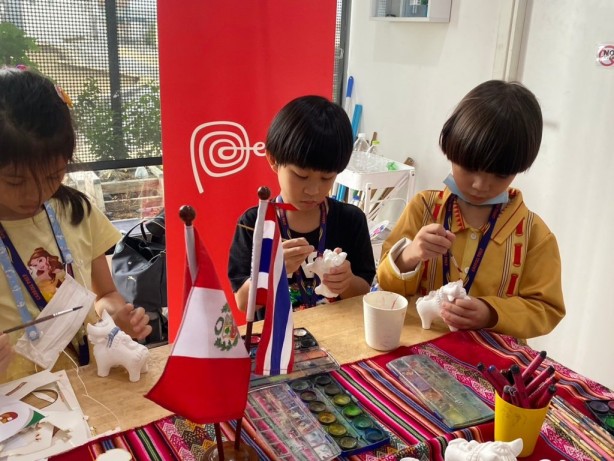
Spanish learning in the early years focuses on confidence, joyful participation, and strong oral foundations through songs, play, and meaningful routines.
Children grow from listening and responding with gestures to using short phrases, understanding simple questions, and beginning early word awareness through pictures and print.
L1 (Foundation)
At this stage, children explore Spanish through songs, rhythm, movement, and classroom routines with close teacher modeling.
You might see children
L2 (Emerging Expression)
Children begin using familiar words within daily routines and simple classroom games.
You might see children
L3 (Building Understanding)
Children follow longer directions and begin using simple sentence frames to express ideas.
You might see children
L4 (Growing Confidence)
Children communicate with short phrases and begin organizing meaning across sequences, routines, and simple texts.
You might see children
At this stage, children begin expressing ideas more confidently and connect language with cultural experiences (e.g., songs, celebrations, shared traditions).
In the primary years, English learning expands from sentence-level expression
to structured thinking, text analysis, and cross-curricular connections.
Students move from reading for understanding to reading for meaning, comparison, and perspective.
L5 (Early Academic Use)
At this stage, children use Spanish more purposefully in classroom learning.
They follow longer instructions, use simple sentence frames, and begin connecting spoken language with early print.
You might see children
Language begins to support learning routines — not just play.
L6 (Expanding Meaning)
Children begin using Spanish to explain, connect ideas, and respond with slightly longer phrases. They also start noticing syllable chunks and repeated spelling patterns.
You might see children
Children start moving from “naming” to “communicating.”
L7 (Building Fluency & Early Decoding)
Children sustain short exchanges, use basic grammar patterns, and begin early decoding awareness through syllables and common word chunks.
You might see children
At this stage, children begin using Spanish as a tool for thinking and sharing ideas.
In the upper primary years, English learning moves into critical thinking, deeper comprehension, and evidence-based communication. Students learn to analyze ideas, evaluate perspectives, and express their thinking with clarity, across subjects and real-world contexts.
L8 (Analytical Reading & Structured Writing)
You might see students
At this stage, students begin using text evidence to support their thinking.
L9 (Perspective, Bias & Strong Reasoning)
You might see students
Here, students move from analysis to evaluation and critique.
L10 (Synthesis, Evaluation & Sophisticated Expression)
You might see students
At this level, students communicate with independence, depth, and evidence-based clarity, preparing for secondary expectations.

